For years, Nitrous lived behind the faders. He was the quiet craftsman in dimly lit studios, shaping the sonics of other artists while keeping his own voice buried under the hum of studio monitors. But with Glass House, released on September 12, 2025, that silence shatters. What we get isn’t just a song — it’s a full confession. It’s a statement of arrival from someone who’s spent too long behind the curtain watching others perform.
This record is less about showing off and more about peeling back layers. Every lyric drips with exhaustion, pride, and defiance. Nitrous doesn’t posture. He bleeds honesty — and that’s precisely what makes Glass House sting.
The Making of the Man Behind the Music
Before the public ever heard his name, Nitrous was known in producer circles for his sharp ear and technical precision. He built soundscapes that others took credit for. It’s a familiar story in hip-hop — the producer whose fingerprints are everywhere, but whose voice remains unknown.
When Nitrous decided to step forward as a rapper, it wasn’t a sudden ambition. It was survival. Glass House captures that pivot — that moment where the man behind the desk steps into the booth. The song isn’t just about his artistic transition; it’s about claiming identity, dignity, and space in a genre where authenticity is currency.
He spent years watching artists chase streams and clout. When he finally dropped Glass House, it was clear: Nitrous isn’t chasing anything. He’s building.
A Deep Dive into the Sound
The production of Glass House is surgical. Every element — from the crisp snare to the murky undertones — mirrors the duality of exposure and protection. There’s menace in the bassline, but it’s the kind that comes from control, not chaos. The track starts slow, like a confession whispered into a recorder, then builds into a storm of grit and momentum.
Nitrous rides the instrumental with precision. His cadence is confident but restrained, letting listeners feel each syllable. The flow is deliberate — not rushed, not forced. It’s clear he understands how space and silence can speak louder than volume.
There’s a cinematic undertone to the mix: haunting keys, dark reverbs, low-end warmth that feels like it’s breathing beneath the surface. You can tell he’s engineered the track himself — every layer sits perfectly, every pause is intentional. It’s polished without losing its soul.
Lyrical Themes and Storytelling
“Glass House” isn’t built on punchlines; it’s built on perspective. Nitrous lays out his struggles with transparency, dissecting the cost of being invisible in an industry obsessed with visibility. He talks about the weight of staying loyal to the craft while watching opportunists rise faster. The metaphor of the glass house runs deep — a fragile structure where everyone sees your moves, but no one truly understands the pain inside.
The verses are written like diary entries — confessions of late nights mixing other artists’ records, questioning his worth, fighting imposter syndrome, and finding balance between humility and hunger. The hook pulls everything together with a chilling simplicity: it’s a statement that even if his walls are transparent, they’re still standing.
His delivery — raw, raspy, almost weary — tells you this isn’t fiction. You can hear the grind in his voice, the miles on his journey. Every bar is a reflection of experience, not imagination.
Influences, Comparisons, and Craft
Nitrous doesn’t sound like anyone else, but you can feel his lineage. There’s the heavy truth-telling of Vinnie Paz, the self-reflection of Kendrick Lamar, the defiance of Nas, and the craftsmanship of a seasoned studio engineer. His artistry sits somewhere between old-school grit and new-school precision.
But what separates him is control. Where many rappers overcompensate with energy, Nitrous trusts the silence. He lets tension breathe. He’s not afraid of pauses — they give his words gravity.
This track could easily fit next to golden-era joints from Jedi Mind Tricks or Mobb Deep, yet it carries the emotional vulnerability of modern lyricists like Joyner Lucas or JID. It’s nostalgic and contemporary at once — a rare balance.
The Larger Vision — A Three-Month Rollout
“Glass House” isn’t a one-off. Nitrous announced that this single marks the beginning of a rollout leading to his debut EP. Over the next three months, he plans to drop several singles, each exploring a different side of his story — identity, faith, self-doubt, and perseverance.
The EP will serve as his formal introduction to the world, stitching these singles into a cohesive narrative. If Glass House is the thesis, the upcoming tracks will be the evidence.
From a strategic standpoint, this rollout is smart. It allows Nitrous to build organic momentum — one single at a time — rather than dropping a full project into the void. He’s pacing himself like a veteran, not a rookie eager for validation.
A Voice That Commands Respect
In a private review by This Is Hip Hop HQ, the track earned a rare 10/10 rating — not for trend appeal, but for raw conviction. Nitrous’s delivery was described as “in-your-face confidence, cadence, and charisma.” The review compared his storytelling and emotion to Vinnie Paz — “raw, unfiltered, and deeply authentic.”
-

The Final Curtain Call: Why Alex Ekubo’s Sudden Exit at 40 Has Nollywood in a Stunned Silence
It’s not every day the “Johnny Just Come” of the big screen decides to leave the party before the cake is even cut. I woke up this Tuesday to…
-

Savage Retro Rock & Peer Pressure: Why DESU TAEM’s “Why’d I Let You Talk Me Into It?” Is a Living Room Mosh Anthem
We’ve all been there. It starts with a simple “Come on, it’ll be fun,” and ends with you questioning every life choice you’ve made since the third grade. Whether…
-

MISSING PERSON ALERT
We appeal to the general public to assist in locating Eunice Ameh, who has been reported missing in Abuja. She was last seen at around 5:40 pm on the…
-

Why “Prefab Jesus” Is the Post-Punk Sermon You Didn’t Know You Needed
Look, we’ve all been there—standing in the metaphorical checkout line of life, staring at a row of “Prefab Jesuses” on the shelf, wondering if any of them actually come…
-
The Audacity of Raw Energy: Why DESU TAEM’s “Derivative Inquisitive” is a Punch to the Gut (In a Good Way)
Listen, I’ve seen a lot of things in this industry, but every now and then, a track comes across my dashboard that doesn’t just ask for attention—it demands it…
-

The Alchemy of Resilience: Why Eylsia’s “Desert Learns to Shine” Is the Sonic Restoration We All Need
Modern music, much like a poorly drafted project plan, usually tries to sell you on the finished skyscraper—all glass, chrome, and zero soul. But every once in a while,…
The critique also highlighted something crucial: Glass House doesn’t just represent Nitrous; it represents the struggles of everyday people — the invisible, the overlooked, the unheard. It’s the soundtrack for anyone who’s ever felt unseen while holding something valuable inside.
That kind of honesty has staying power. It’s what makes the track timeless instead of trendy.
Why “Glass House” Matters
In an age where artists are pressured to perform for algorithms, Nitrous dares to perform for truth. His transparency cuts deeper than the music. He’s showing what happens when you stop hiding your scars and start rapping from them.
Glass House is a declaration that vulnerability isn’t weakness — it’s weaponry. It’s what separates artists who chase relevance from those who create legacy.
For Canadian hip-hop, Nitrous’s arrival means something bigger: the scene has gained another voice grounded in craft and honesty, not hype. And for global listeners, it’s proof that you can build something lasting without gimmicks — just skill, substance, and soul.
Final Word
Glass House is the sound of an artist finally opening the blinds and letting the world see him — cracks, reflections, and all. It’s gritty, cinematic, and fearless. Nitrous doesn’t ask for attention; he commands it.
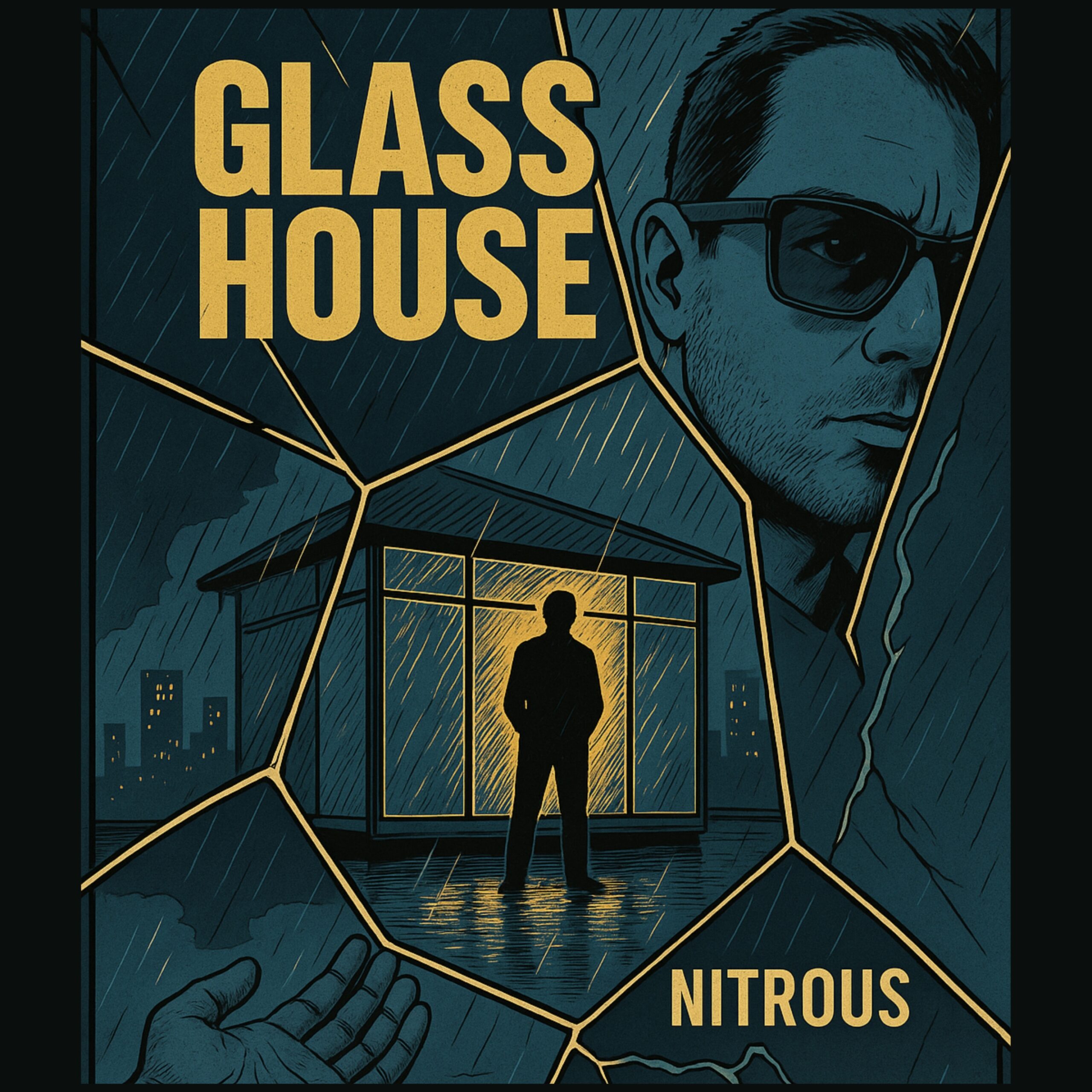
He’s not a newcomer trying to make noise. He’s a craftsman reclaiming his narrative. And if this single is any indication, his upcoming EP won’t just introduce him — it’ll remind everyone why hip-hop still matters when it tells the truth.
